Showing posts with label Heart disease. Show all posts

Friday, October 28, 2011

Power Packed Hybrid Broccoli to Take Care of Heart

Vegetables are already in the kitchen to prevent heart disease and promote heart health. Broccoli is one of those having a lot of beneficial effect on heart health .
 Studies show that broccoli may help in the pre...Image via Wikipedia
Glucoraphanin is the chemical owes much of the credit for heart health. It works by reducing bad fat and promoting rise of good fat in circulation. Oxidation of fat has been squarely blamed for development of atherosclerosis. And rapture of atherosclerotic plaque is mostly the cause of heart attack.
Glucoraphanin is mostly found in broccoli. Scientists cross bred normal broccoli with a wild variety having a lot of glucoraphanin content and worked over 14 years to produce the hybrid "Super Broccoli". There is no genetic modification and has been has been granted a patent by European authorities.
It's been on sale as Beneforte in select stores in California and Texas for the last year, and hit British shelves this month. Later this fall, the broccoli will be rolled out across the U.S.
It is said that the super broccoli should taste slightly sweeter because it contains less sulphur.  

Enhanced by Zemanta
read more...

Sunday, September 18, 2011

Yellowish Fatty Deposits around Eye Lids can be Tale-Tell Sign of Future Heart Disease

Some people having yellowish deposits in and around eye lids some times come for cosmetic surgery to get those removed.
_55382045_c0064008-cholesteatoma
Researchers from Herlev Hospital in Denmark have concluded recently that people having such deposits are prone for heart disease and heart attacks.
Such deposits are called xanthelasmata and may be the tip of ice berg of the fat level of those people.
Persons with these lesions should be investigated thoroughly for heart ailments.
Enhanced by Zemanta
read more...

Wednesday, September 14, 2011

ABCS of Heart Care


The U.S. Health and Human Services department, the American Heart Association, on Tuesday launched Million Hearts, a coordinated approach to prevent heart problems in the population at risk. The government is contributing nearly $200 million as a part of President Barack Obama's preventive care strategy.


In ABCS;
  • A: Aspirin, low dose aspirin, taken twice is better than once. It has to be weighed against the possible side effect of causing bleeding from gut. Bleeding from gut is preventable by proton pump inhibitors (PPIs) like Omeprazole. Aspirin is the only NSAID (Non-Steroidal Anti-Inflammatory and Analgesic Drugs), which is safer than others in causing kidney damage.
  • B: Blood pressure control to the optimal level. Hypertension is best diagnosed in ambulatory setting than through visit to doctor’s chamber. Goal is maintaining blood pressure below 140/90 millimeters of mercury.
  • C: Cholesterol control, specially the bad ones like LDL (Low Density Lipoproteins) and VLDL (Very Low Density Lipoproteins). Raising the level of HDL (High Density Lipoproteins). Most important is the ratio.
  • S: Sodium. Sodium chloride, the common salt, reduction of which in diet is an important factor in reducing hypertension. Daily intake in patients with hypertension can be restricted to 1500 milligrams per day. At any rate, it should be below 2500 milligrams/day. Dietary Approach to Stop Hypertension (DASH) diet highlights the salt restriction. One has to see the packaged food for the amount of salt content.
These goals are achievable. Possible through wider publicity and awareness.
Enhanced by Zemanta
read more...

Saturday, January 8, 2011

Continue or Discontinue Medications after Balloon Angioplasty

Micrograph of an artery that supplies the hear...Image of Atherosclerosis of Artery 
“I have undergone balloon angioplasty now; I am safe from further heart attack”. It can be a false sense of security.
Angioplasty is a procedure to dilate the narrowed part of artery to heart. The narrowing of heart artery called the coronary artery is due to atherosclerosis. It may be found in several segments of an artery. Dilatation of a segment dies not halt the primary process, atherosclerosis.
One has to follow the advice of physician to check the progression of the disease. He/she may have to;
· Change lifestyle from sedentary to more active one,
· Control Diabetes,
· Control hypertension,
· Control cholesterol,
· Take regular medications.
These measures may help the patient from further heart damage.
Enhanced by Zemanta
read more...

Thursday, September 30, 2010

New Software for Implantable Cardioverter Defibrillators (ICD) for Heart Patients

Implantable cardioverter-defibrillatorImage of Implantable Cardioverter Defibrillator (ICD) According to the American Heart Association, about 114,000 patients undergo surgery either to implant or replace Implantable Cardioverter Defibrillators (ICD) every year for heart diseases with arrhythmias.
Some heart diseases give rise to defects in conduction of electrical signal from the generating place in the heart to all over the heart. Normally electrical signal for contraction of heart muscle is generated at one spot in the heart, and that traverses all over the heart to active all the muscle for systole or contraction of heart. This occurs in a rhythmical and regulated manner. A normal adult heart beats around 72times/minute.
If there is any conduction problem, heart may beat irregularly; sometime slowly and sometimes at a much higher rate. At times there occur ineffective contractions at a higher rate without any efficient pumping of blood called fibrillation. Sometimes heart chambers may also contract in a dissociated manner which is detrimental to life.
 Schematic representation of the atrioventricul...Image Conduction System (RED)
In these situations cardiologists put a device called implantable cardioverter defibrillator (ICD) under the skin of chest wall, and electrodes from there go to heart. It senses abnormality in contraction and delivers electrical shock of specified amplitude to stop heart from irregularities. That makes the heart function in a desired way.
If the device becomes faulty, that may endanger the life of the person. The conventional ICDs signal the patient once a day at a specified time about the functional status of the device. A device if at all goes wrong after that period that may give more shocks to heart which are undesirable and may actually prove to be detrimental. Inappropriate shocks are much more damaging, psychologically, than necessary electrical jolts.
The Lead Integrity Alert (LIA) software checks the device for suspicious electrical signals six times a day, and if problems are detected, alerts the patient with an audible beep every four hours, according to the study, which was published in the Sept. 27 issue of Circulation. Many electrophysiologists have started using the software soon after the FDA approved it in August 2008.
Researchers found that the patients who had standard monitoring, 70 percent received one or more inappropriate shocks, compared with only 38 percent of those who were monitored with the help of LIA software. Five or more inappropriate shocks were delivered to 50 percent of the patients who received standard monitoring, but only 25 percent of patients with LIA.
The researchers also found that 72 percent of patients with LIA had no inappropriate shock, or had at least three days warning prior to an inappropriate shock, compared with only 50 percent of those who received standard monitoring.
A faulty device needs to be replaced safely at appropriate time without giving more problems to a patient.
Enhanced by Zemanta
read more...

Tuesday, June 8, 2010

Sore Throat may Lead to Rheumatic Heart Disease

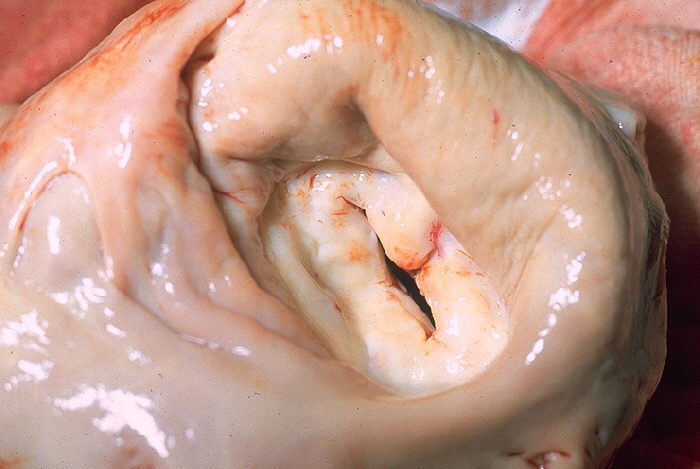
Though the incidence of rheumatic heart disease is decreasing to a great extent, the scene is not same for developing and under developing countries. Usually the valve of heart is involved in this disease, which guard the back flow of blood in its chambers; heart having four chambers. This disease is a chain reaction from a simple disease, sore throat. Streptococcal infection of throat and tonsils, if untreated or under treated, streptococcal toxins trigger a host of immune reactions in the body, leading to rheumatic joint disease. Then it affects the valve of heart, narrowing it to hinder free flow of blood from one chamber to the other.  


Mitral stenosis is the result. There is a lot of financial implications and hardship for the family members involved in treating it. Fortunately, with adequate treatment of sore throat, the incidence of this disease is decreasing.


Reblog this post [with Zemanta]
read more...
Related Posts Plugin for WordPress, Blogger...